> For the complete documentation index, see [llms.txt](https://docs.graphlit.dev/llms.txt). Markdown versions of documentation pages are available by appending `.md` to page URLs; this page is available as [Markdown](https://docs.graphlit.dev/account-setup-one-time/create-project.md).
# Create Project
Create your first Graphlit project and get your API credentials.
Projects in Graphlit are isolated workspaces for your applications. Each project has its own data and storage.
{% hint style="info" %}
**Think of projects like databases:** Each application gets its own project. Building two apps? Create two projects.
{% endhint %}
***
{% stepper %}
{% step %}
#### Create a New Project
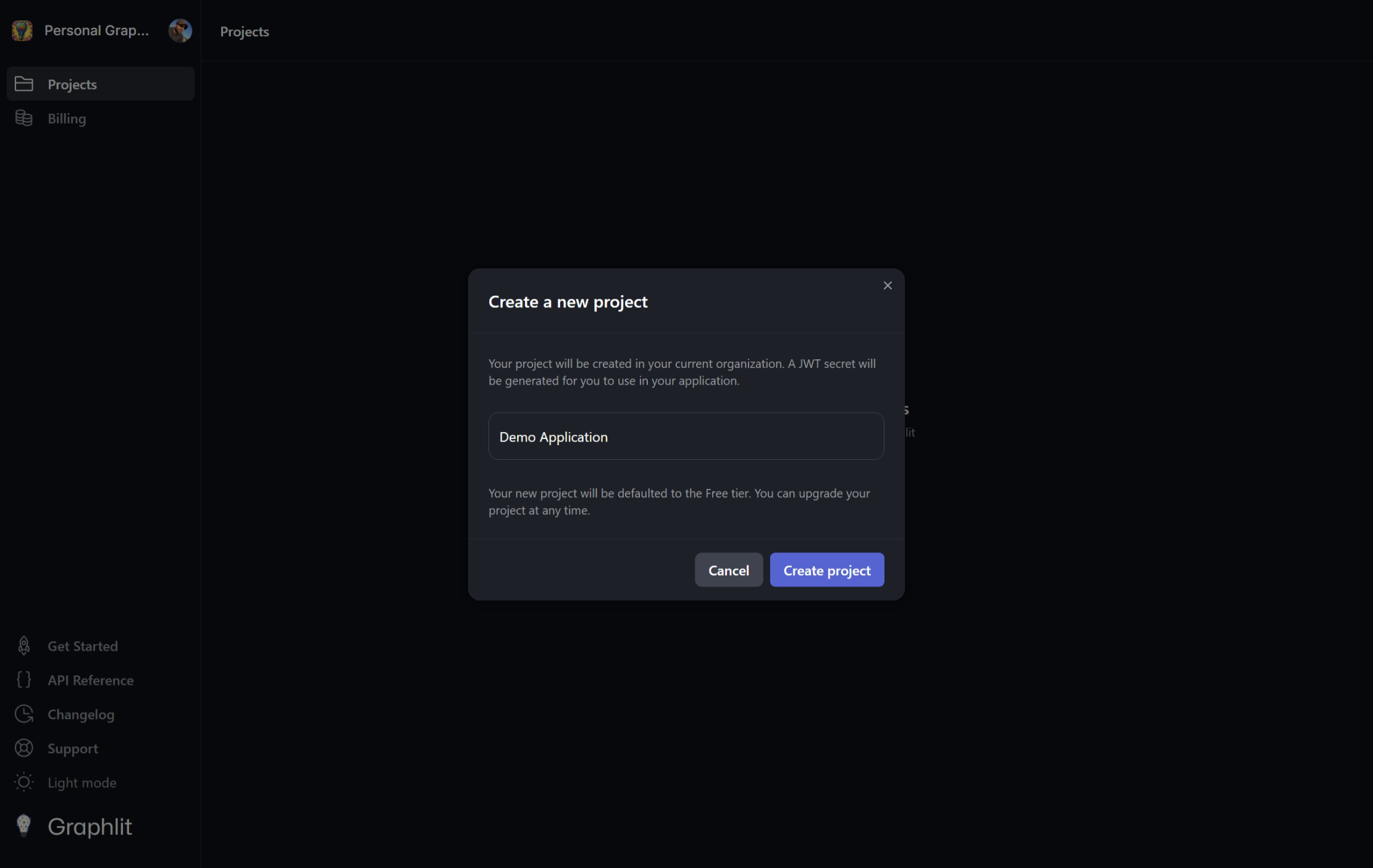
From your organization dashboard, click **New Project**.
**Project setup:**
1. Enter a project name (e.g., "My AI Agent", "Customer Support AI")
2. Click **Create Project**
{% hint style="success" %}
**Free tier by default:** No payment method required to get started. You get 1GB of data included.
{% endhint %}
{% endstep %}
{% step %}
#### View Project Overview
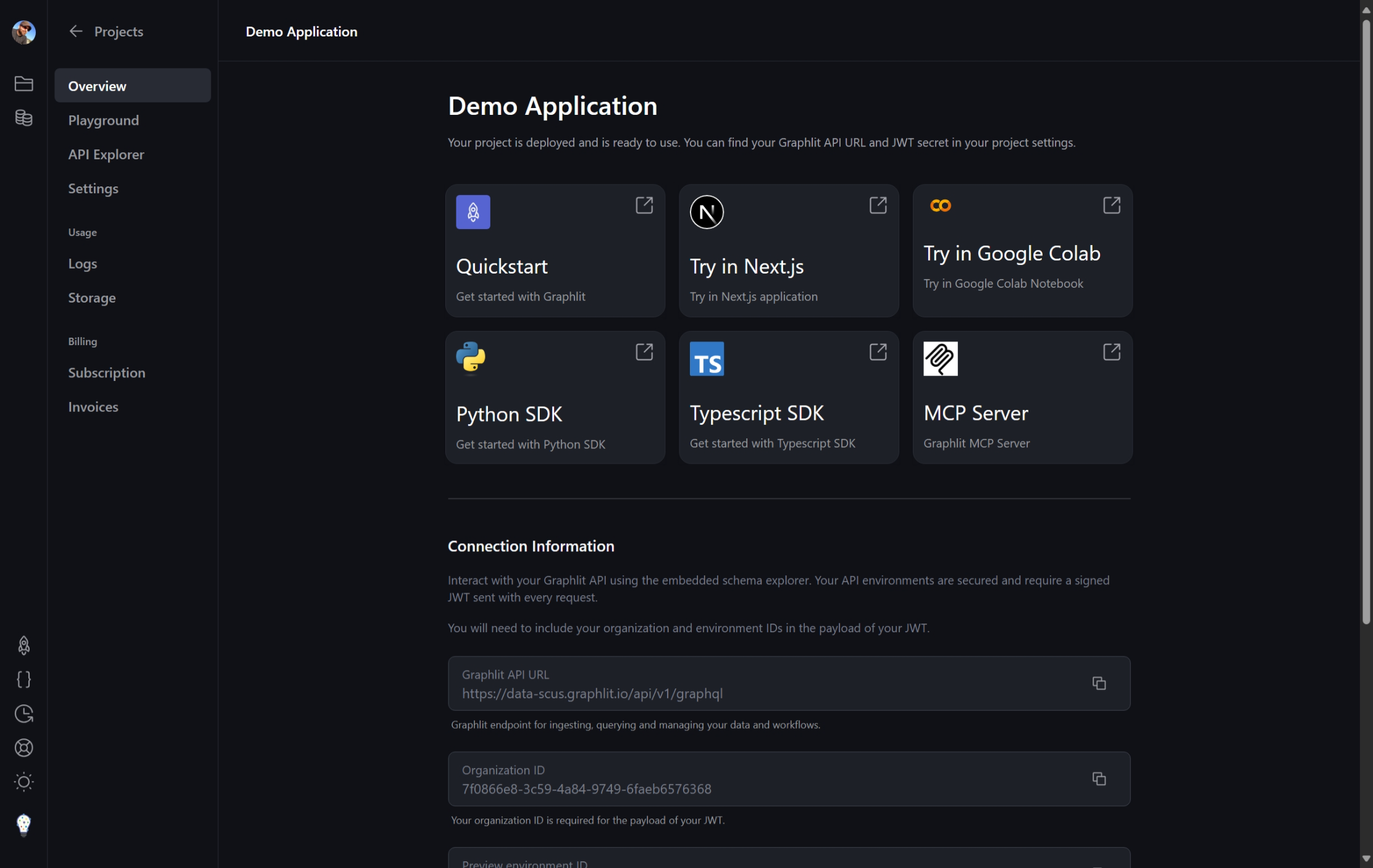
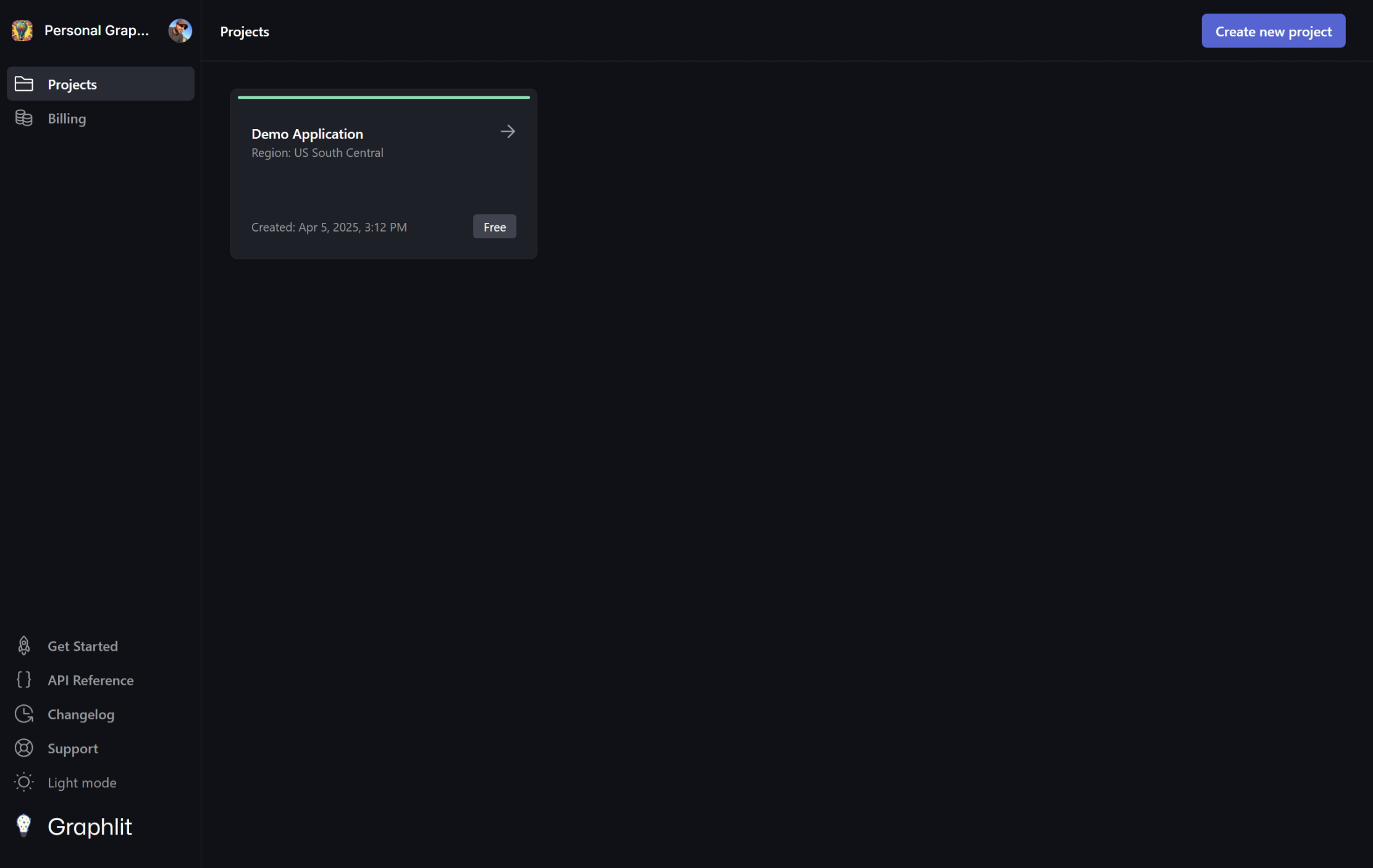
Your project is created! You'll see the project **Overview** page with connection information.
{% hint style="info" %}
**Deployment region:** Projects currently deploy to US South Central (Azure). Multi-region support coming soon.
{% endhint %}
{% hint style="info" %}
**Tip:** Click "Projects" at the top-left to return to your projects list.
{% endhint %}
{% endstep %}
{% step %}
#### Get Your API Credentials
Each project includes two environments: **Preview** (development) and **Production**.
**Environments are fully isolated:**
* Separate data and storage
* Independent credentials (Environment ID, JWT Secret)
* No resource sharing
**Billing:** Projects are billed together (not per environment). Payment methods are managed at the organization level.
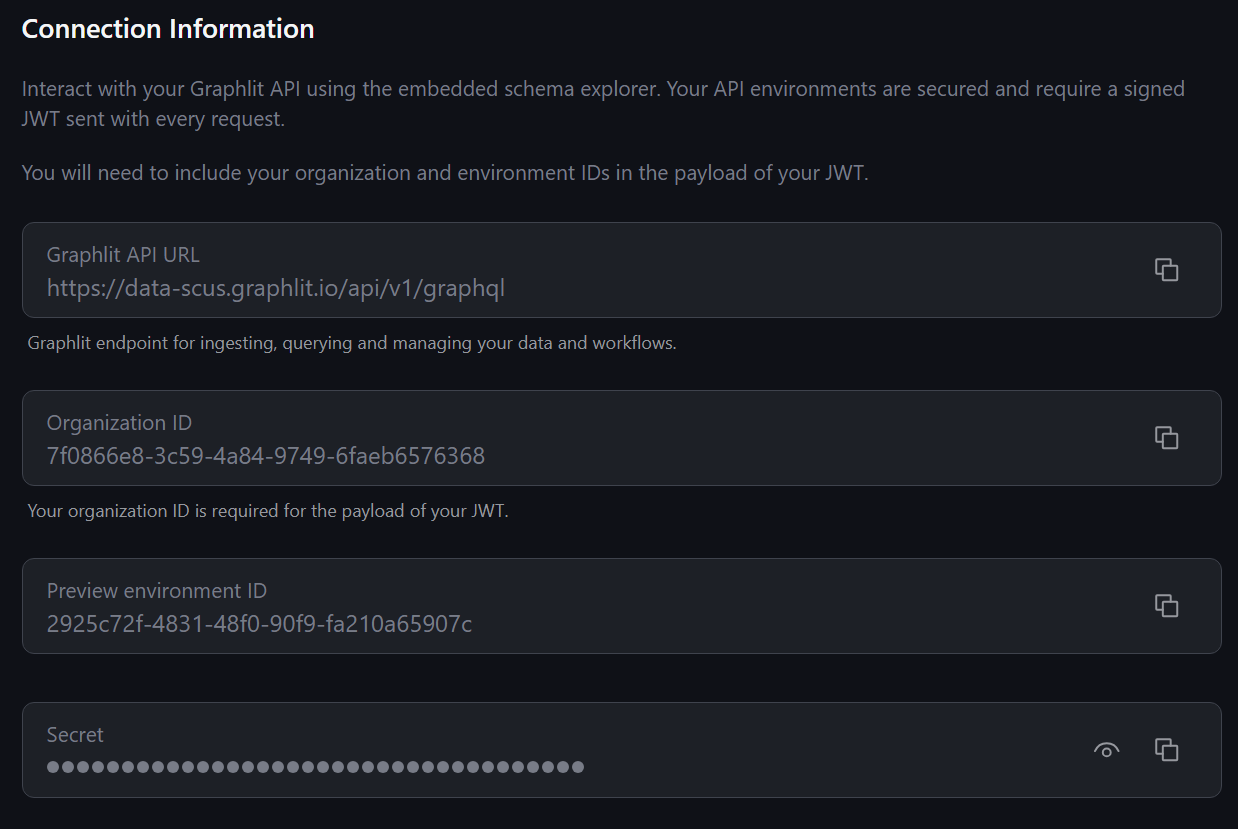
**Copy your credentials:** Under **Connection Information**, you'll find:
* **Organization ID** (shared across all projects)
* **Environment ID** (Preview or Production)
* **JWT Secret** (authentication key)
Click the copy icon to copy each value.
{% hint style="warning" %}
**Keep your JWT Secret secure:** Treat it like a password. Never commit it to git or share publicly.
{% endhint %}
{% endstep %}
{% endstepper %}
***
## Next Step
[**Get your API credentials →**](/account-setup-one-time/credentials.md) - Configure your development environment (1 minute)
{% hint style="success" %}
Once credentials are copied, run the [`hello.ts`](/account-setup-one-time/credentials.md#verify-your-setup) check to confirm everything works before the Quickstart tutorial.
{% endhint %}
***
## Need Help?
* **Ask Graphlit**: Open the chatbot from the Developer Portal sidebar (or visit [ask.graphlit.dev](https://ask.graphlit.dev)) for SDK code snippets.
* **Sample Apps**: See [graphlit-samples](https://github.com/graphlit/graphlit-samples) for end-to-end examples.
* **Discord Community**: Join [discord.gg/ygFmfjy3Qx](https://discord.gg/ygFmfjy3Qx) to chat with the team.
.png?alt=media)
 to copy each value.
{% hint style="warning" %}
**Keep your JWT Secret secure:** Treat it like a password. Never commit it to git or share publicly.
{% endhint %}
{% endstep %}
{% endstepper %}
***
## Next Step
[**Get your API credentials →**](/account-setup-one-time/credentials.md) - Configure your development environment (1 minute)
{% hint style="success" %}
Once credentials are copied, run the [`hello.ts`](/account-setup-one-time/credentials.md#verify-your-setup) check to confirm everything works before the Quickstart tutorial.
{% endhint %}
***
## Need Help?
* **Ask Graphlit**: Open the chatbot from the Developer Portal sidebar (or visit [ask.graphlit.dev](https://ask.graphlit.dev)) for SDK code snippets.
* **Sample Apps**: See [graphlit-samples](https://github.com/graphlit/graphlit-samples) for end-to-end examples.
* **Discord Community**: Join [discord.gg/ygFmfjy3Qx](https://discord.gg/ygFmfjy3Qx) to chat with the team.
to copy each value.
{% hint style="warning" %}
**Keep your JWT Secret secure:** Treat it like a password. Never commit it to git or share publicly.
{% endhint %}
{% endstep %}
{% endstepper %}
***
## Next Step
[**Get your API credentials →**](/account-setup-one-time/credentials.md) - Configure your development environment (1 minute)
{% hint style="success" %}
Once credentials are copied, run the [`hello.ts`](/account-setup-one-time/credentials.md#verify-your-setup) check to confirm everything works before the Quickstart tutorial.
{% endhint %}
***
## Need Help?
* **Ask Graphlit**: Open the chatbot from the Developer Portal sidebar (or visit [ask.graphlit.dev](https://ask.graphlit.dev)) for SDK code snippets.
* **Sample Apps**: See [graphlit-samples](https://github.com/graphlit/graphlit-samples) for end-to-end examples.
* **Discord Community**: Join [discord.gg/ygFmfjy3Qx](https://discord.gg/ygFmfjy3Qx) to chat with the team.